Flat & Low-Slope Roofing in Tampa
TPO, modified bitumen, and coatings for the additions, porches, and low-slope sections a pitched roof cannot cover - where the seams and drainage decide everything.
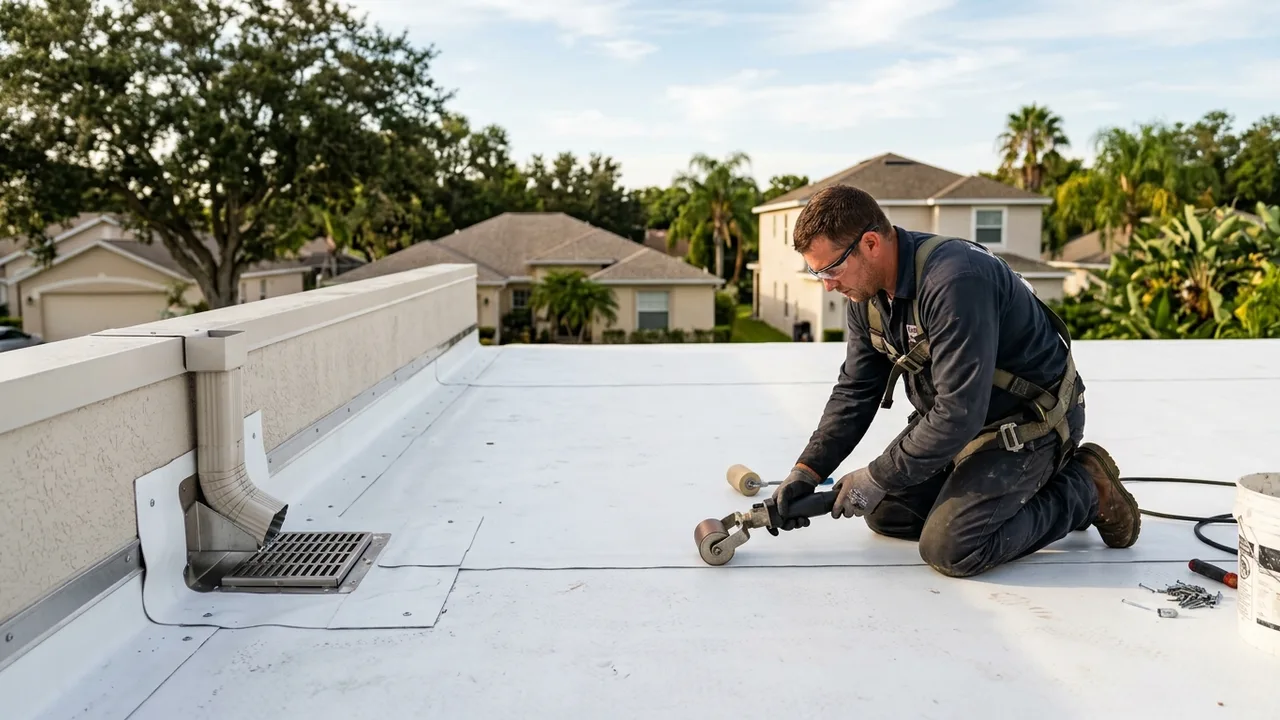
Flat and low-slope roofing covers the parts of a Tampa home a shingle or tile roof cannot handle properly: additions, porches, carports, and low-pitch sections where water does not run off fast enough for a pitched covering. This includes TPO and modified-bitumen membrane systems, coatings, and leak repairs on existing flat roofs. It suits homeowners with a leaking or aging flat section, or an addition that needs a membrane rather than shingles. Tell us what the flat area covers, its rough size, and what you are seeing, and a licensed Florida roofer can assess it. The inspection focuses on the membrane, the seams, and the drainage - because ponding water and failed seams are where flat-roof leaks almost always start.
Why a flat roof lives and dies by seams and drainage
A flat roof is a different animal from a pitched one, and the choice of system matters. TPO is a light single-ply membrane, usually white, that reflects heat well and is common on residential low-slope work - handy in the Tampa sun. Modified bitumen is a tough multi-layer system suited to areas that see occasional foot traffic. The common thread is that flat roofs leak at their seams and where water sits. Water does not sheet off a low slope the way it does a pitched roof, so ponding, blocked drains, and split or lifted seams are where the trouble begins - and Tampa's downpours find every one of them. A proper flat-roof job gets the falls and drainage right, welds or bonds the seams cleanly, and details the edges and penetrations so water has nowhere to pool. On a repair, a good roofer traces the leak to the failed seam or flashing rather than coating the whole surface and hoping for a dry season.
What flat & low-slope roofing covers
Modified bitumen roof repair
Low-slope drainage assessment
Roof coating suitability check
How it works
1
Tell us about the flat section
Let us know where it is - a low-slope addition, a porch or a commercial deck - and whether you are seeing ponding or leaks.
2
A membrane-and-drainage inspection
A licensed Florida roofer checks the membrane, the seams and the drainage, since standing water and failed seams are what sink a flat roof here.
3
System options, firm price
You get straight options on the membrane system with an itemized estimate - any earlier figure is indicative only.
4
Sealed and checked
Once approved, the flat-roof work is completed to Florida Building Code standards and water-tested where sensible.
Why homeowners use us for flat & low-slope roofing
Seams and drainage come first
Flat roofs leak at their seams and where water ponds, so those get inspected and fixed rather than papered over with a coating.
The right membrane for the spot
TPO and modified bitumen suit different situations. The choice is matched to your roof, not to a single default product.
Repairs traced, not smeared
A leak is traced to the failed seam or flashing so the repair targets the cause instead of coating the surface and hoping.
Why does my flat roof keep ponding and leaking?
Recurring leaks on a flat roof usually come down to two things: water that sits instead of draining, and seams that have split or lifted. Because a low slope cannot shed water quickly, any dip, blocked drain, or sag lets water pond, and standing water finds every weak seam and penetration over time. Coating the whole surface can hide the symptom for a season, but if the falls and drainage are wrong, the ponding comes back and the leak with it. A lasting fix corrects the drainage where it can, repairs or renews the failed seams and flashing, and details the edges so water is directed off the roof. An inspection tells you whether you need a targeted seam repair or a fuller membrane renewal, so you are not paying for a coating that only buys a few months.
Flat & Low-Slope Roofing across Tampa
We help homeowners with flat & low-slope roofing right across Tampa and Hillsborough County.
Flat & Low-Slope Roofing in Hyde Park Historic South Tampa neighbourhood known for bungalows, brick streets and proximity to Bayshore Boulevard Flat & Low-Slope Roofing in Ybor City Historic cigar-making district east of downtown, now a mixed-use area with brick streets and historic casitas Flat & Low-Slope Roofing in Seminole Heights Trendy north Tampa neighbourhood with early-20th-century homes, local breweries and tree-lined avenues Flat & Low-Slope Roofing in Davis Islands Upscale island community south of downtown with waterfront homes, a small beach and a village centre Flat & Low-Slope Roofing in Westshore Major business and retail corridor near Tampa International Airport, with residential pockets and high-rise… Flat & Low-Slope Roofing in Palma Ceia Established South Tampa neighbourhood with golf-course views, mature oaks and early Florida homes near… Flat & Low-Slope Roofing in Ballast Point South Tampa bayside neighbourhood with a waterfront park, pier and a mix of mid-century and traditional homes Flat & Low-Slope Roofing in Channel District Revitalised downtown waterfront area with condos, entertainment venues and easy access to the cruise terminal Flat & Low-Slope Roofing in Tampa Heights One of Tampa's oldest neighbourhoods, just north of downtown, undergoing revitalisation with historic homes… Flat & Low-Slope Roofing in Carrollwood Suburban north Tampa community built around golf courses and lakes, popular with families Flat & Low-Slope Roofing in Town 'n' Country Large unincorporated community west of Tampa with bayfront parks, subdivisions and commercial corridors Flat & Low-Slope Roofing in Temple Terrace Northeast Hillsborough city with rolling terrain, a historic golf course and homes near the Hillsborough River Flat & Low-Slope Roofing in Sulphur Springs North Tampa neighbourhood known for its historic water tower, riverfront park and early 20th-century housing… Flat & Low-Slope Roofing in Tampa Palms Planned New Tampa community with golf courses, conservation areas and large suburban homes Flat & Low-Slope Roofing in Brandon Fast-growing eastern Hillsborough suburb with retail corridors, subdivisions and a mix of older and newer…
Flat & Low-Slope Roofing: common questions
How much does a new roof typically cost in Tampa, Florida?
Roof replacement costs in Tampa vary based on roof size, pitch, material, and whether code upgrades or decking repairs are required. Homeowners usually get multiple written, itemized estimates from licensed contractors to compare labor, materials, and any permit or inspection-related costs under Florida Building Code.
What roofing materials hold up best in Tampa’s heat and hurricanes?
In Tampa, homeowners commonly choose architectural asphalt shingles, metal roofing, or tile that are rated for high wind and UV exposure. Contractors typically recommend materials that meet or exceed Florida wind-load requirements and include proper underlayment systems designed for our hot, humid, and storm-prone climate.
What questions should I ask a Tampa roofing contractor before hiring them?
You should ask for their Florida license number, proof of liability and workers’ compensation insurance, who pulls the permit, and what materials and warranties they offer. It is also common to request photos or addresses of recent Tampa-area jobs and a detailed written scope of work with payment terms.
How often should I have my roof inspected in Tampa’s climate?
Many Tampa homeowners have their roofs inspected every one to two years, and after major storms, to catch small issues before they become leaks or structural problems. Regular inspections are especially important for older roofs and for documenting condition for insurance and remaining useful life reports.
What should be included in a written roofing estimate from a Tampa contractor?
A proper estimate usually lists materials, labor, tear-off, disposal, any decking repairs, permit fees, and estimated start and completion dates. It should also specify the shingle or roofing product line, underlayment type, ventilation details, and clearly outline manufacturer and workmanship warranties.
Talk to a specialist
Ready to sort your flat & low-slope roofing in Tampa?
Tell us about your flat & low-slope roofing and a licensed Florida roofer can inspect the roof and quote from what is actually there.