Metal Roofing in Tampa
Standing-seam and metal panel roofing for homeowners who want a longer-lasting roof and strong wind performance - and are weighing whether the higher up-front cost pays off.
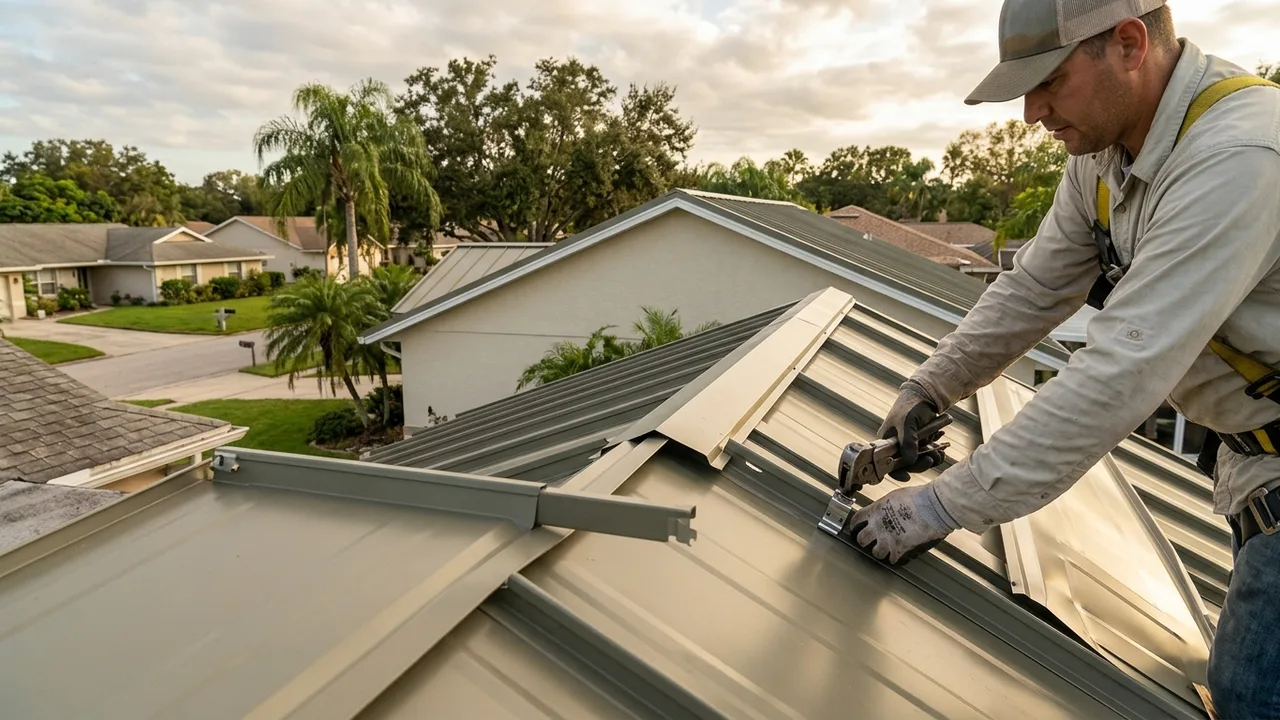
Metal roofing appeals to Tampa homeowners who plan to stay a while and want a roof that shrugs off wind and lasts. This covers standing-seam and metal panel systems as well as repairs to existing metal roofs. It is a common choice on coastal and higher-exposure homes and for owners who would rather pay more once than reroof twice. Tell us whether you are replacing an existing roof or switching to metal for the first time, along with the roof's pitch and shape, and a licensed Florida roofer can assess the structure and the right system. Standing-seam and exposed-fastener panels behave quite differently over time, so getting the right system on the right roof is the whole game.
How metal performs in a high-wind market
Metal earns its higher price on service life and wind performance. Tampa sits in a high-wind region under the Florida Building Code, with real wind-uplift requirements for roofing, and a properly installed metal roof performs strongly against exactly that. Standing-seam systems hide their fasteners under raised seams, which removes the exposed screw-and-washer points that age first on cheaper panel roofs, so they generally last longer and leak less. Metal also sheds water fast, reflects heat, and - specified correctly - stands up to salt air better, which matters near the bay and the coast. The trade-offs are honest ones: a higher up-front cost than shingles, and a real dependence on correct underlayment and detailing. A metal roof performs only as well as it is installed, which is why the installer matters as much as the material.
What metal roofing covers
Exposed fastener metal panels
Metal roof coating review
Metal flashing coordination
How it works
1
Tell us what you want from metal
Whether it is a full standing-seam roof or a metal section over a porch, tell us the roof size, pitch and what is there now.
2
A panel-and-fastener inspection
A licensed Florida roofer checks the deck, the seams and the fastening detail that matter most on a metal system in Florida heat and wind.
3
Profile options, firm price
You get straight options on panel profile and finish with an itemized estimate - earlier figures are only indicative.
4
Installed for the long run
Once approved, the metal roof is installed to Florida Building Code wind standards and checked on completion.
Why homeowners use us for metal roofing
The right system for the roof
Standing-seam and exposed-fastener panels age differently. The roofer matches the system to your roof and exposure, not a one-size default.
Detailing that keeps it dry
Metal performs only when the underlayment, seams, and penetrations are detailed correctly - where a careful installer earns their place.
Straight talk on cost vs life
Metal costs more up front. You hear honestly whether the longer lifespan pays off for how long you plan to stay.
Is metal worth the extra cost here?
The sticking point is always price - metal costs noticeably more than an asphalt shingle roof, so the fair question is whether the extra is worth it. The honest answer depends on your plans. Metal's long life and strong wind performance pay off for owners who intend to stay, and on exposed homes near the water the durability and salt tolerance can justify the premium. If you are likely to sell within a few years, a quality shingle roof may make more sense. And correct installation matters more than the label: a well-detailed metal roof lasts decades, a poorly detailed one leaks at its fasteners. A good roofer lays the numbers and the trade-offs out plainly so the decision is yours.
Metal Roofing across Tampa
We help homeowners with metal roofing right across Tampa and Hillsborough County.
Metal Roofing in Hyde Park Historic South Tampa neighbourhood known for bungalows, brick streets and proximity to Bayshore Boulevard Metal Roofing in Ybor City Historic cigar-making district east of downtown, now a mixed-use area with brick streets and historic casitas Metal Roofing in Seminole Heights Trendy north Tampa neighbourhood with early-20th-century homes, local breweries and tree-lined avenues Metal Roofing in Davis Islands Upscale island community south of downtown with waterfront homes, a small beach and a village centre Metal Roofing in Westshore Major business and retail corridor near Tampa International Airport, with residential pockets and high-rise… Metal Roofing in Palma Ceia Established South Tampa neighbourhood with golf-course views, mature oaks and early Florida homes near… Metal Roofing in Ballast Point South Tampa bayside neighbourhood with a waterfront park, pier and a mix of mid-century and traditional homes Metal Roofing in Channel District Revitalised downtown waterfront area with condos, entertainment venues and easy access to the cruise terminal Metal Roofing in Tampa Heights One of Tampa's oldest neighbourhoods, just north of downtown, undergoing revitalisation with historic homes… Metal Roofing in Carrollwood Suburban north Tampa community built around golf courses and lakes, popular with families Metal Roofing in Town 'n' Country Large unincorporated community west of Tampa with bayfront parks, subdivisions and commercial corridors Metal Roofing in Temple Terrace Northeast Hillsborough city with rolling terrain, a historic golf course and homes near the Hillsborough River Metal Roofing in Sulphur Springs North Tampa neighbourhood known for its historic water tower, riverfront park and early 20th-century housing… Metal Roofing in Tampa Palms Planned New Tampa community with golf courses, conservation areas and large suburban homes Metal Roofing in Brandon Fast-growing eastern Hillsborough suburb with retail corridors, subdivisions and a mix of older and newer…
Metal Roofing: common questions
What roofing materials hold up best in Tampa’s heat and hurricanes?
In Tampa, homeowners commonly choose architectural asphalt shingles, metal roofing, or tile that are rated for high wind and UV exposure. Contractors typically recommend materials that meet or exceed Florida wind-load requirements and include proper underlayment systems designed for our hot, humid, and storm-prone climate.
How much does a new roof typically cost in Tampa, Florida?
Roof replacement costs in Tampa vary based on roof size, pitch, material, and whether code upgrades or decking repairs are required. Homeowners usually get multiple written, itemized estimates from licensed contractors to compare labor, materials, and any permit or inspection-related costs under Florida Building Code.
What questions should I ask a Tampa roofing contractor before hiring them?
You should ask for their Florida license number, proof of liability and workers’ compensation insurance, who pulls the permit, and what materials and warranties they offer. It is also common to request photos or addresses of recent Tampa-area jobs and a detailed written scope of work with payment terms.
How often should I have my roof inspected in Tampa’s climate?
Many Tampa homeowners have their roofs inspected every one to two years, and after major storms, to catch small issues before they become leaks or structural problems. Regular inspections are especially important for older roofs and for documenting condition for insurance and remaining useful life reports.
What should be included in a written roofing estimate from a Tampa contractor?
A proper estimate usually lists materials, labor, tear-off, disposal, any decking repairs, permit fees, and estimated start and completion dates. It should also specify the shingle or roofing product line, underlayment type, ventilation details, and clearly outline manufacturer and workmanship warranties.
Talk to a specialist
Ready to sort your metal roofing in Tampa?
Tell us about your metal roofing and a licensed Florida roofer can inspect the roof and quote from what is actually there.