Roof Replacement in Tampa
When repairs keep chasing new leaks or the roof has simply aged out, a full replacement is the honest answer - and the moment to get the material and the wind rating right.
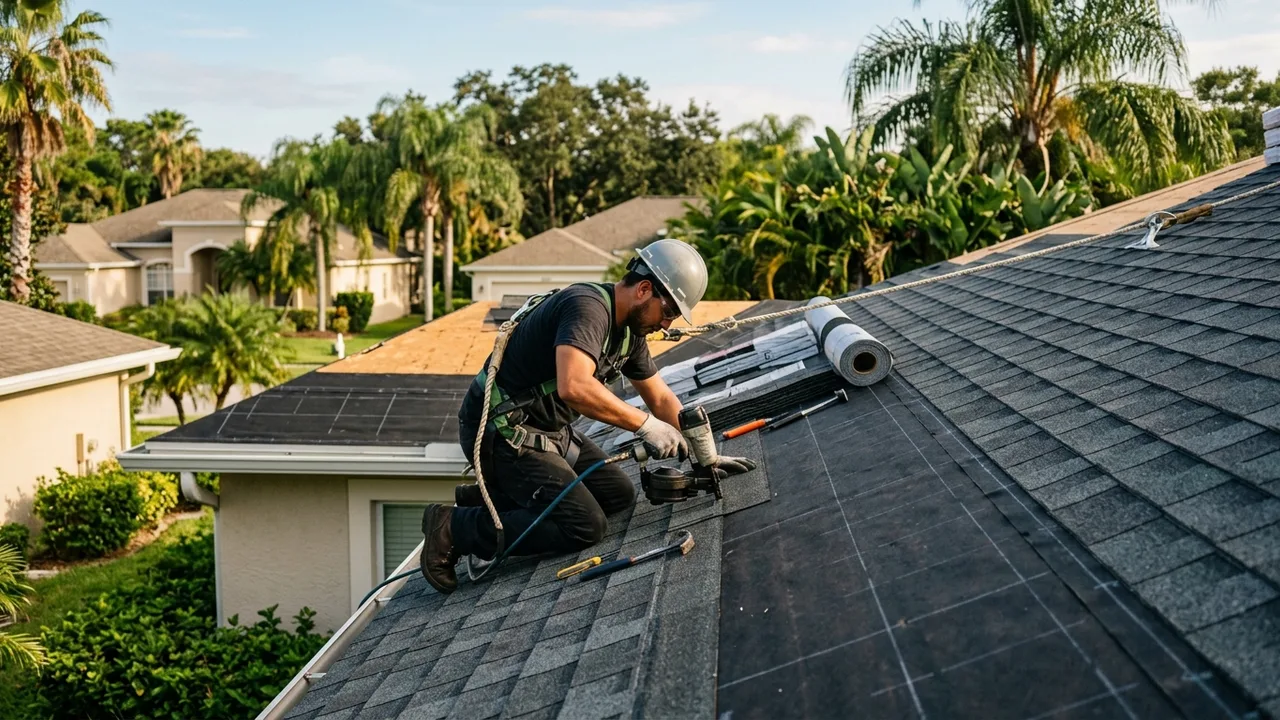
Replacing a roof is one of the biggest checks a Tampa homeowner writes, and it usually comes at a stressful time - after a bad storm season, a failed insurance inspection, or one leak too many. It is the right move when repairs have started chasing new leaks, the roof is fifteen years or older with widespread wear, or you are re-roofing before a sale. Tell us the age and material of your current roof and what you are seeing, and a licensed Florida roofer can inspect the decking and structure - not just the surface - so the estimate reflects the real job. A full tear-off is also your one clean chance to fix what is hidden underneath and to upgrade how the roof handles Tampa's wind.
Shingle roof, tile, or metal - and why the wind rating matters here
In Tampa the three common choices are architectural asphalt shingles, concrete or clay tile, and standing-seam metal. Shingles are the most affordable and fastest to install, but Florida heat, UV, and storms tend to give them twelve to twenty years. Tile suits the Mediterranean and Spanish-style homes across South Tampa and lasts far longer, though it is heavier and costs more up front. Metal carries a long life and strong wind performance, at a higher price. Whatever the covering, Tampa sits in a high-wind region under the Florida Building Code, so the roof has to be fastened and detailed to meet real wind-uplift requirements - and a proper reroof includes the underlayment, drip edge, and flashing, not just the shingles on top. A tear-off also exposes the decking, so any soft or rotten plywood gets replaced before it is sealed under a new roof. That is exactly why layering a new roof over an old one is rarely the honest answer.
What roof replacement covers
Metal roof replacement
Tile roof underlayment renewal
Ventilation and decking review
How it works
1
Tell us about the old roof
Share the roof's age, current material, and whether repairs have started chasing new leaks - that tells us if a replacement is really the call.
2
A tear-off-ready inspection
A licensed Florida roofer checks the decking, ventilation and existing layers, not just the surface, so the estimate reflects the real re-roof rather than a guess from the ground.
3
Material choice and firm price
You get straight options across shingle, tile and metal with an itemized replacement estimate - earlier ballpark figures are only indicative.
4
Installed and permitted
Once you approve, the new roof is installed to Florida Building Code standards, permitted, and inspected on completion.
Why homeowners use us for roof replacement
The deck gets checked, not just the surface
A tear-off is the one chance to fix soft decking and failed underlayment before a new roof seals them in. The inspection looks underneath.
Built to Florida wind standards
Tampa roofs must meet the Florida Building Code's high-wind requirements, and the licensed roofer builds the new system to those standards.
One clear written estimate
You get a single itemized estimate after the inspection - material, tear-off, decking allowance, permit, warranty. Any earlier figure is indicative.
Is it really time, or would a repair do?
The most common worry is paying for a whole roof when a repair might do - and it is a fair one. The answer comes from an inspection, not a sales pitch. If the damage is localized and the roof is otherwise sound, a targeted repair is the smarter spend, and a good roofer will say so. Replacement earns its cost when leaks keep coming back, the underlayment has failed, or the roof is old enough that fixing one area just moves the next leak along. There is also an insurance angle in Florida: carriers increasingly scrutinize older roofs, and a documented replacement can matter at renewal. Getting a real look at the decking and flashing is what separates a genuine recommendation from a quota.
Roof Replacement across Tampa
We help homeowners with roof replacement right across Tampa and Hillsborough County.
Roof Replacement in Hyde Park Historic South Tampa neighbourhood known for bungalows, brick streets and proximity to Bayshore Boulevard Roof Replacement in Ybor City Historic cigar-making district east of downtown, now a mixed-use area with brick streets and historic casitas Roof Replacement in Seminole Heights Trendy north Tampa neighbourhood with early-20th-century homes, local breweries and tree-lined avenues Roof Replacement in Davis Islands Upscale island community south of downtown with waterfront homes, a small beach and a village centre Roof Replacement in Westshore Major business and retail corridor near Tampa International Airport, with residential pockets and high-rise… Roof Replacement in Palma Ceia Established South Tampa neighbourhood with golf-course views, mature oaks and early Florida homes near… Roof Replacement in Ballast Point South Tampa bayside neighbourhood with a waterfront park, pier and a mix of mid-century and traditional homes Roof Replacement in Channel District Revitalised downtown waterfront area with condos, entertainment venues and easy access to the cruise terminal Roof Replacement in Tampa Heights One of Tampa's oldest neighbourhoods, just north of downtown, undergoing revitalisation with historic homes… Roof Replacement in Carrollwood Suburban north Tampa community built around golf courses and lakes, popular with families Roof Replacement in Town 'n' Country Large unincorporated community west of Tampa with bayfront parks, subdivisions and commercial corridors Roof Replacement in Temple Terrace Northeast Hillsborough city with rolling terrain, a historic golf course and homes near the Hillsborough River Roof Replacement in Sulphur Springs North Tampa neighbourhood known for its historic water tower, riverfront park and early 20th-century housing… Roof Replacement in Tampa Palms Planned New Tampa community with golf courses, conservation areas and large suburban homes Roof Replacement in Brandon Fast-growing eastern Hillsborough suburb with retail corridors, subdivisions and a mix of older and newer…
Roof Replacement: common questions
How much does a new roof typically cost in Tampa, Florida?
Roof replacement costs in Tampa vary based on roof size, pitch, material, and whether code upgrades or decking repairs are required. Homeowners usually get multiple written, itemized estimates from licensed contractors to compare labor, materials, and any permit or inspection-related costs under Florida Building Code.
How long does a roof replacement usually take in Tampa?
A typical single-family roof replacement in Tampa often takes one to three working days, depending on roof size, complexity, weather, and inspection scheduling. Time can increase if there are unexpected wood repairs, permit delays, or if afternoon thunderstorms interrupt work during the rainy season.
How do Tampa roof inspections work for a permitted roof replacement?
For permitted roof covering replacements in Tampa, city inspectors review work at key stages, often including in-progress and final inspections, and some inspections may be conducted virtually. Contractors usually schedule these inspections through the city’s system, and the job is not considered complete until all required inspections are passed.
Can I stay in my home during a roof replacement in Tampa?
Most homeowners remain in their homes during roof replacement, though they can expect noise, vibration, and limited yard or driveway access while work is underway. Contractors typically explain safety precautions, parking arrangements, and cleanup plans in advance so families in Tampa can plan around the project schedule.
Is financing available for roof replacements in the Tampa Bay area?
Many roofing companies in Florida offer or coordinate financing options because roof replacements are a major expense for homeowners. It is common for Tampa homeowners to ask about payment plans, third-party lenders, and any promotional terms, while still reviewing the full project cost and contract details.
Talk to a specialist
Ready to sort your roof replacement in Tampa?
Tell us about your roof replacement and a licensed Florida roofer can inspect the roof and quote from what is actually there.